Tuesday, November 07, 2006

Marx And Commentators On Marx On The Justice Of Capitalism (Part 2 Of 3)

In part 1, I quote Marx, showing that one can read his complaints about capitalism as claiming something other than that capitalism is unfair or unjust in its logic. This is no novelty to those who have studied the post-1960s flowering of interest in Marx.

Some have argued that Marx is ambiguious on whether he thinks exploitation is unjust. I only know about Norman Geras (1985 and 1992) second-hand:
"Norman Geras poses the issue of whether the condemnation of capitalism in Marx is rooted in a principle of justice. He begins by itemizing arguments contrary to this hypothesis:
  • In good contractual logic (including the purchase and sale of labour-power), 'sold' labour-power belongs to the capitalist, who is henceforth legally entitled to use it without any restrictions other than those prescribed by law. The capacity to generate a surplus-value possessed by this remarkable commodity is simply a 'windfall' for the buyer, not an injustice to the 'seller'.
  • The wage relation cannot be deemed 'just' or 'unjust'. Conceptions of justice are, in fact, historical - that is to say, relative to a particular mode of production. Just as slavery is not 'unjust' from the standpoint of a slave society, exploitation is not 'unjust' by the contractual rules specific to general commodity production.
  • The notion of distributive justice, which is theoretically questionable, fosters the practical illusion that exploitation can be corrected or eliminated by reforming income distribution. But it would be as absurd to demand fair renumeration on the basis of the wage system as to claim freedom on the basis of slavery.
  • Invoking principles of justice inevitably entails a formalism that is inconceivable in the absence of the state and institutions that are, in fact, condemned to wither away. Communist society is firmly located 'beyond justice'. 'Equal right' thus remains a bourgeois right by virtue of the fact that it is inscribed in the horizon of justice. By contrast, the needs principle, which is opposed to the abstract equivalence of the commodity order, is no longer a principle of distributive justice.
Geras offers a symmetrical refutation of this set of arguments, likewise grounded in a reading of Marx... Having expounded thesis and antithesis, Geras proposes his own synthesis..." -- Daniel Bensaïd (2002).
Bensaïd argues that the logic of Capital doesn't support those who claim Marx took the exploitation of the proletariat to be unjust.

Zizek is one of the most famous "postmodern" cultural critics writing today. And he knows of the reading of Marx I am discussing:
"Let us recall the gist of Marx's notion of exploitation: exploitation is not simply opposed to justice - Marx's point is not that workers are exploited because they are not paid the full value of their work. The central thesis of Marx's notion of 'surplus-value' is that a worker is exploited even when he is 'fully paid'; exploitation is thus not opposed to the 'just' equivalent exchange; it functions, rather, as its point of inherent exception - there is one commodity (the workforce) which is exploited precisely when it is 'paid its full value'. (The further point not to be missed is that the production of this excess is strictly equivalent to the universalization of the exchange-function: the moment the exchange-function is universalized - that is, the moment it becomes the structuring principle of the whole of economic life - the exception emerges, since at this point the workforce itself becomes a commodity exchanged on the market. Marx in effect announces here the Lacanian notion of the Universal which involves a constitutive exception.) The basic premise of symptomal reading is thus that every ideological universality necessarily gives rise to a particular 'extimate' element, to an element which - precisely as an inherent, necessary product of the process designated by the universality - simultaneously undermines it: the symptom is an example which subverts the Universal whose example it is." -- Slavoj Zizek (1999), p. 180
Those hard-headed, "no bullshit" analytical Marxists have similar findings:
"The riddle was, how could expropriation of labor come about - for come about it must to explain the huge difference between class fortunes under capitalism - in the absence of a coercive institution for the exchange of labor? Marx constructed an answer to this question with his version of the labor theory of value, surplus value, and exploitation. What is important for our purposes is just this: The task of the theory was to show that the coerciveness of the institution of labor exchange was not a necessary condition for the existence of exploitation of one class by another.

Marx believed that the conditions for the existence of the wage labor market were themselves coercive - that is, workers had no choice but to sell their labor power, as they had been separated from the means of production, and had no alternative for survival. In a precise sense, however, this simply sets certain initial conditions on the bargaining strength of the two parties in the market; it does not obviate the fact, juridically, that participation in the labor market is voluntary, at least in a model of pure capitalism. This is one example of Marx's 'scientific', as opposed to 'utopian', approach to capitalism. He wished to explain the existence of exploitation in a noncoercive model, in the sense described. This is obviously more difficult than appealing simply to the omnipotence of the capitalist class." -- John Roemer (1981), p. 146 - 147
And one of Sraffa's colleagues wrote along the same lines:
"It is in the same context that we must understand the importance which Marx attached to his distinction between 'labour' and 'labour-power': an importance essential for the context of exploitation as a key to understanding the bourgeois (or capitalist) mode of production. The role of the labour theory of value in relation to the theory of surplus value is frequently misunderstood. Often this is interpreted as embodying a Lockean 'natural right' principle, to the effect that the product of a man's labour belongs 'of right' to the labourer; whence it is held to follow that the appropriation of part of this product by the capitalist is 'unnatural' and unethical. Hence exploitation is interpreted as a quasi-legal or ethical ethical concept rather than a realistic economic description. If what we have said about labour and the labour process has been appreciated, it should be clear that this is an incorrect interpretation. What could be said, of course, is that the notion of labour as productive activity implicitly afforded the definition of exploitation as an appropriation of the fruits of activity by others - appropriation of these fruits by those who provided no productive activity of their own. But far from being an arbitrary or unusual definition of 'productive' and 'unproductive', this would, surely, meet with general agreement as normal usage of these words. The problem for Marx was not to prove the existence of surplus value and exploitation by means of a theory of value: it was, indeed, to reconcile the existence of surplus value with the reign of market competition and of exchange of value equivalents. As he himself expressed it: 'To explain the general nature of profits, you must start from the theorem that, on an average, commodities are sold at their real values, and that profits are derived from selling them at their real values... If you cannot explain profit upon this supposition, you cannot explain it at all.'"

...The importance which Marx attached to the distinction between labour and labour-power lay precisely in its enabling him to show how there could be inequality and nonequivalence in 'equivalent exchange' - or exploitation and appropriation of what was created by the producers consistently with the theory of value (i.e., by demonstrating how 'profits are derived by selling them at their values')." -- Maurice Dobb, Introduction to Marx (1970a)
  • Bensaïd, Daniel (2002). Marx for Our Times: Adventures and Misadventures of a Critique New York: Verso
  • Geras, Norman (1985). "The Controversy About Marx And Justice", New Left Review, N. 150 (Mar./Apr.)
  • Geras, Norman (1992). "Bringing Marx To Justice: An Addendum and Rejoinder", New Left Review, N. 195 (Sep./Oct.)
  • Marx, Karl (1970a). A Contribution to the Critique of Political Economy, Moscow: Progress Publishers
  • Roemer, John E. (1981). Analytical Foundations of Marxian Economic Theory, Cambridge: Cambridge University Press.
  • Zizek, Slavoj (1999). The Ticklish Subject: The Absent Centre of Political Ontology, London and New York: Verso.

Marx And Commentators On Marx On The Justice Of Capitalism (Part 1 Of 3)

One might read Marx as suggesting workers deserve what they produce. And that capitalists get a return to their capital because they unjustly take some of what the workers make. Marx says, according to this reading, that things will be different after the revolution. Workers will get all that they make.

This series of posts documents that this reading of Marx as engaged in unambiguous and wholehearted bourgeois moralizing is contradicted by the readings of a wide range of Marxist writers. Notice that the writers I choose are not from just one tendency or one time period in Marxism. I quote first from Marx, and then, in reverse chronological order, from various Marxists. In The Critique of the Gotha Program, Marx explicitly argues against arguing for communism on the basis of the unfairness or fairness of distribution:
"What is 'a fair distribution'?

Do not the bourgeois assert that the present-day distribution is 'fair'? And is it not, in fact, the only 'fair' distribution on the basis of the present-day mode of production? Are economic relations regulated by legal conceptions, or do not, on the contrary, legal relations arise out of economic ones? Have not also the socialist sectarians the most varied notions about 'fair' distribution?" -- Karl Marx (1970b)
Furthermore, in Capital, Marx argues that rights are respected in the market for labour-power:
"This sphere,...within whose boundaries the sale and purchase of labour-power goes on, is in fact a very Eden of the innate rights of man. There alone rule Freedom, Equality, Property, and Bentham. Freedom, because both buyer and seller of a commodity, say of labour-power, are constrained only by their own free will. They contract as free agents, and the agreement they come to, is but the form in which they give expression to their common will. Equality, because each enters into relation with the other, as with a simple owner of commodities, and they exchange equivalent for equivalent. Property, because each disposes only of what is his own. And Bentham, because each looks only to himself. The only force that brings them together and puts them in relation with each other, is the selfishness, the gain and the private interests of each. Each looks to himself only, and no one troubles himself about the rest, and just because they do so, do they all, in accordance with the pre-established harmony of things, or under the auspices of an all-shrewd providence, work together to their mutual advantage, for the common weal and in the interest of all." -- Karl Marx (1965, Chapter VI)
This last quote from Marx has less to do with justice or fairness. Nevertheless, I suspect some may be surprised to see that Marx agrees that market transactions are made to the mutual advantage of both sides engaged in the transaction:
"So far as regards use-values, it is clear that both parties may gain some advantage. Both part with goods that, as use-values, are of no service to them, and receive others that they can make use of. And there may also be a further gain. A, who sells wine and buys corn, possibly produces more wine, with given labour time than farmer B could, and B, on the other hand, more corn than wine-grower A could. A, therefore, may get, for the same exchange value, more corn, and B more wine, than each would respectively get without any exchange by producing his own corn and wine. With reference, therefore, to use-value, there is good ground for saying that 'exchange is a transaction by which both sides gain.'" -- Karl Marx (1965, Chapter V)
  • Marx, Karl (1965). Capital, V. 1, Moscow: Progress Publishers
  • Marx, Karl (1970b). Critique of the Gotha Programme, Moscow: Progress Publishers

Saturday, November 04, 2006

Hicks' Value and Capital Outside Historical Time

I consider J. R. Hicks' Value and Capital (Second edition, 1946) to be one of the founding documents of post-(World) War (II) economics.

I find interesting that when Hicks wants to compare the average periods of production entrepreneurs choose to adopt, he is clear that this calculation must be at a given rate of interest (Chapter XVII, Section 4). This argument reminds me of Champernowne's chain index measure of capital, an index later promoted by Edwin Burmeister.

Anyways, in Hicks' theory of sequences of temporary equilibria, time periods are partitioned into weeks. Spot markets instantaneously come to clear on each Monday. Agents then carry out planned production, planned consumption, and contracted deliveries of commodities during the remainder of each week. It seems to me that this separation of the dynamics of reaching cleared markets and the dynamics of the transactions during the week severely limits the applicability of the model.

The time paths of prices and of quantities that agents in the model anticipate need not be stationary. They need not even be quasi-stationary, that is, all growing at a constant rate. Suppose random variation is introduced into the model. Then the agents anticipate time paths, in general, to be non-ergodic. Nevertheless, the agents in the model maximize with non-corner points in their plans exhibiting the usual marginal equalities, including intertemporal marginal equalities.

Hicks' theory could be set only in logical time, not in historical time. John Maynard Keynes, however, self-consciously tried to develop a General Theory set in historical time:
"How do we manage in such circumstances to behave in a manner which saves our face as rational, economic men? We have devised for the purpose a variety of techniques, of which the much the most important are the three following:
  • We assume that the present is a much more serviceable guide to the future than a candid examination of past experience would show it to have been hitherto. In other words we largely ignore the prospect of future changes about the actual character of which we know nothing.
  • We assume that the existing state of opinion as expressed in prices and the character of existing output is based on a correct summing up of future prospects, so that we can accept it as such unless and until something new and relevant comes into the picture.
  • Knowing that our own individual judgement is worthless, we endeavor to fall back on the judgement of the rest of the world which is perhaps better informed. That is, we endeavor to conform with the behavior of the majority or the average. The psychology of a society of individuals each of whom is endeavoring to copy the others leads to what we may strictly term a conventional judgement.
Now a practical theory of the future based on these three principles has certain marked characteristics. In particular, being based on so flimsy a foundation, it is subject to sudden and violent changes. The practice of calmness and immobility, of certainty and security, suddenly breaks down. New fears and hopes will, without warning, take charge of human conduct. The forces of disillusion may suddenly impose a new conventional basis of valuation. All these pretty, polite techniques, made for a well-paneled Board Room and a nicely regulated market, are liable to collapse. At all times the vague panic fears and equally vague and unreasoned hopes are not really lulled, and lie but a little way below the surface.

Perhaps the reader feels that this general, philosophical disquisition on the behavior of mankind is somewhat remote from the economic theory under discussion. But I think not. Tho this is how we behave in the market place, the theory we devise in the study of how we behave in the market place should not itself submit to market-place idols. I accuse the classical economic theory of being one of these pretty polite techniques which tries to deal with the present by abstracting from the fact that we know very little about the future." -- J. M. Keynes (1936)

I think Hicks came to recognize the force of the limitations of his model with his self-declared change of name in 1975:
"J. R. Hicks [is] a 'neoclassical' economist now deceased ... John Hicks [is] a non-neo-classic who is quite disrespectful towards his 'uncle'."

Friday, November 03, 2006

Tuesday, October 31, 2006

A Physicist Versus Neoclassical Economics

Over at the Financial Times, Philip Ball, "consultant editor of Nature", describes neoclassical economics as "baroque fantasies of a peculiar science". He illustrates why "neoclassical idiocies" matter with the Russian transition economy, repeats a thesis developed at length by Philip Mirowski, and references Paul Ormerod. So I find this all very interesting.

I found out about this from a Mark Thoma post, and lots of commentators responded to that post there.

Update: Another Mark Thoma post references a supposed response from David Altig to Philip Ball. Philip Ball has his own blog, on which he responds to letters to the Financial Times. Mark Thoma has even more.

Monday, October 30, 2006

Libertarianism Versus "Libertarianism"

One might meet, in certain precincts of the Internet, soi-disant libertarians. As far as I am concerned, "libertarians" of this stripe are victims of commodity fetishim, and they have stolen the label. Traditionally, a libertarian is an anarchist, that is a kind of socialist. For example, Maureen Stapleton plays a libertarian in Warren Beatty's movie Reds. Anarchists, generally, do not have Ludwig Von Mises in their pantheon of heroes.
"...readers should take ... particular warning that I am absolutely not against freedom. On the contrary, I am for it. Libertarians ... think they are for freedom but they don't know what freedom is. In reality, their doctrine is so contrary to freedom that it ought to be entitled 'anti-libertarianism'. The thief comes in innocent disguise, but the beautiful garment is stolen. (The Right are good at that sort of thing.) So, if you want to make your copy of this book read more accurately, you should delete 'libertarian' and 'libertarianism' throughout, substituting 'anti-libertarian' and 'anti-libertarianism' as you go. For 'anti-libertarianism', etc., you should substitute 'anti-anti-libertarianism'. Unfortunately, this would make the book cumbersome to read, so I haven't followed the advice myself except in my choice of title, where my subject is named according to its true nature." -- Alan Haworth, Anti-Libertarianism: Markets, Philosophy, and Myth, Routledge, 1994: 5
Haworth does have more substantial points. Warning: this is political philosophy for those who think "If a lion could speak, we would not understand him" is a thesis worth discussing and who are comfortable with thought experiments which might lead one to be willing to say that a rock feels pain. Nevertheless Haworth is quite readable. (As an example of unreadable philosophy strongly following the later Wittgenstein, I cite John Wisdom's Other Minds.) I realize that those interested in political philosophy and "Libertarianism" should also read Robert Nozick.

Sunday, October 29, 2006

Hanged By ROPE

Steven Pressman, the editor of the Review of Political Economy, following the advice of the referees, has rejected my paper, "Creating Two-Good Reswitching Examples". My paper is mathematically correct, but the reviewers had good reasons for rejecting it. One reviewer thought I did not make a point that I should have:
"As students of Hicks (1965), Spaventa (1968), and Garegnani (1970) know, it is easy to generate examples of reswitching if the 'machine' is unique to the technique. This means that whenever a process is changed in one sector, it must be changed in the other sector as well. One is not therefore dealing with variable proportions of physically unchanged inputs as one considers different techniques. Anyone committed to the latter view as the 'meaning of technical choice' might therefore be suspicious of reswitching results. It is all the more important for the author of this paper to emphasize the fact that a mere variation in the proportions of physically unchanged inputs is sufficient to generate reswitching when there are three inputs: labor and two produced goods in each sector. This is the strength of the argument, but the point is never made. Emphasizing it would make the paper much more interesting. Otherwise, why would an instructor, interested in teaching reswitching, not just use the Hicks/Spaventa/Garegnani model?"

I guess I went overboard in refusing to point out how reswitching has been used to critique (versions of) neoclassical theory. The above reviewer also noted that it is not so easy to create a reswitching example that satisfies the constraints I point out. Two reviewers, by recasting the problem, showed me that section two can be made simpler. Two reviewers also show me how to greatly simplify sections four and five. The first, second, and sixth sections will need to be rewritten to take account of changes in the other sections, if I rewrite this paper. However, I still feel justified in recommending the first, second, and sixth sections as a tutorial introduction to reswitching.

Naturally, I would prefer to have written a paper suitable for publication. And the ROPE reviewers took slightly longer than is promised by the journal. Nevertheless, I would like to express my appreciation for the reviewers' solid engagement with my paper and their thorough examination. If I am to rewrite this paper and submit if for publication elsewhere, I will find their comments extremely helpful. I'm not going to get right to that. I am first attempting to write a paper by focusing some of my examination of the relationship between capital-theoretic "paradoxes" and General Equilibrium theory.

Tuesday, October 24, 2006

After The Exposure Of The Cult Of Personality

One book in random stuff I've read: On Communism: In Defense of the New Course, by Imre Nagy (English Translation: Frederick A. Praeger, 1957). I do not claim any expertise on their lives and times. But I find intriguing communist reformers, like Nagy and Alexander Dubcek, who tried to make no-longer-actually existing socialism into a worthwhile system. I guess they sincerely wanted to live in a society in which the free development of each is the condition for the free development of all.

I think one can see in Nagy's book that his context is after Nikita Khrushchev's 20th Party Congress speech. Nagy frequently complains about some of his Hungarian comrades, who claimed to have signed onto reforms, but, according to Nagy, worked to undermine them. I also thought interesting Nagy's complaints that Hungarians had not seen increases in their standard of living, despite the economic growth over the period before his writing. Apparently, the growth had been unduly concentrated in heavy industry. Maybe Nagy would have had an opinion on my game.

I realize Nagy's book is a primary document, and he probably felt constrained in what he could argue. Apparently, he felt he had more freedom to maneuver than turned out to be the case.

Monday, October 23, 2006

Terence, This Is Stupid Stuff

Do mainstream economists respond to critics of their theory with instrumentalism, whether such a response engages the criticism or not? Consider an Amazon.com review of Philip Mirowski's More Heat Than Light: Economics as Social Physics, Physics as Nature's Economics:
Ideal versus real is the heart of this book

First off, the problem with this book is that people jump to conclusions too quickly. If I say that discrete math is not the same as continuous math, yet I go on to point out that the Z-Transform is analogous to the LaPlace Transform, there is an inherent ambiguity, a diaelectric, that seems contradictory but makes sense: all models are just that, models to reality. And reality cannot be modeled exactly (even the Theory of Relativity has flwas, which physicists are exploring today). In medice for example, Grey's Anatomy, a medical textbook, has been criticized for showing a 'perfect' anatomy that does not in fact exist in nature. Analogously, the old argument about which classical statute was 'better': classical Greek or Roman? Ideal or 'real'? (and if 'real', whose 'real'; the recent statute in Trafalger square showing a paraplegic pregnant woman comes to mind)?

The point being that classical economics is not perfect, nor is it flawed - it just is. Come up with a better model, and the economic world will beat a path to your doorstep.

BTW, I've not read this book. Please recommend this review if it's been helpful.

Saturday, October 21, 2006

Around And About

Tuesday, October 17, 2006

Should I Read Petri and Hahn?

Over on Crooked Timber, Michael Greinecker asserts without argument:
Sraffians are actually debating about non-problems. The standard GE model is a strict generalisation of the classic one. They simply don't get it, as they have proven at a conference on this very issue. The people who are really into aggregation problems are theorists like Kirman and Hildenbrand.
I find Petri (2004) cogent and well-argued. But given the references in the introduction to my draft paper, "A Model for Exploring Manifestations of Capital-Theoretic 'Paradoxes' in Temporary Equilibria", would I learn anything new by reading the proceedings in the volume edited by Petri and Hahn? This paper also shows why I don't find it convincing to say dynamic equilibria (which I take to be the same as temporary equilibria) are immune from Sraffian criticisms.

Reviews of Keen's Debunking Economics

I read some reviews as negative and some as positive. The negative reviews include both those who think neoclassical economics is basically inconsistent and incoherent (but think Keen fails to point out the errors well enough) and those who think otherwise. By the way, I argued with Keen about his presentation of the SMD theory before publication, even though I had never heard the label "Gorman form" then.
  • Balak, Benjamin (2005). Eastern Economic Journal: 148-150
  • Belenkiy, Ari (2005). Journal of Economic Behavior & Organization, V. 56: 129-139
  • Laibman, David (2003). Review of Radical Political Economics (Summer): 351-353
  • Misina, Miroslav (2005). Economic Journal (November): F419-F422
  • Murphy, Robert P. and Gene Callaham (2003). Review of Austrian Economics, V. 16, N. 4: 381-384
  • Myatt, Anthony(2004). Journal of Economic Education (Winter): 100-103
  • Nesiba, Reynold F. (2006). Review of Radical Political Economics (Winter): 154-157
  • Oleson, Ted (2003). Journal of Economic Issues: 228-231
  • Quiggin, John (2002). (?): 233-235
  • Whalen, Charles J. (2004). (?): 255-257

Sunday, October 15, 2006

Accumulate, accumulate! That is Moses and the prophets!

The data in Tables 1 and 2 are from Kenickell (2003), as quoted in Cagetti and De Nardi (2005). Table 2 is in 2001 Dollars. Raw data are from the Survey of Consumer Finances (SCF), I guess. Unlike the Panel Study of Income Dynamics (PSID), the SCF does not allow researchers to follow households over time, but is better in tracking the richest households. Cagetti and De Nardi survey a variety of publications by researchers examining trends in wealth ownership.

Table 1: Distribution of Wealth By Year
Percentile
Group
19891992199519982001
0-49.92.7%3.3%3.6%3.0%2.8%
50-89.929.929.728.628.427.4
90-94.913.012.611.911.412.1
95-98.924.124.421.323.325.0
99-10030.330.234.633.932.7


Table 2: Absolute Distribution of Wealth By Year
Net
Worth
19891992199519982001
< $07.3%7.2%7.1%8.0%6.9%
$0-$1,0008.06.35.25.85.4
$1,000-$25,00012.714.415.013.112.8
$25,000-$100,00023.225.426.422.922.0
$100,000-$250,00020.221.622.122.619.2
$250,000-$500,00011.09.39.312.013.0
$500,000-$1,000,0005.44.65.16.07.8
> $1,000,0004.73.83.64.97.0

The data show ownership of wealth is extremely concentrated in the United States. The top one percent own approximately a third, while the top five percent own more than half of total United States wealth.

Cagetti and De Nardi examine three types of models commonly used in mainstream economics:
  • Models with agents with an infinite lifespan
  • Overlapping generations models
  • Models that combine features from both the above types of models
Agents in the model are heterogeneous because different agents receive different shocks to, say, wages. Cagetti and De Nardi show that none of these model types is able to generate inequality as extreme as is seen in the data. (Cagetti and De Nardi do not put their conclusion so stark.)

Cagetti and De Nardi suggest extensions to these mainstream models to solve this empirical puzzle. But I do not know why one would not consider other types of models. I can think of other places to look.

I don't fully understand the literature Cagetti and De Nardi survey, but I read them as confining themselves to models with analytical solutions. I think agent-based simulations are an interesting approach. One uses simulation, when analytical solutions are not available, to understand long term dynamics in such models. These models are incompatible with methodological individualism inasmuch as model parameters include macroeconomic distributions over, say, tastes. Offhand, I have only one reference (Wright 2004) for such models, but I understand diverse researchers, for example, Alan Kirman have been exploring such models.

I consider the Kahn-Kaldor-Pasinetti-Robinson theory of income distribution to be a classic Post Keynesian approach. This theory has received increasing criticism within the Post Keynesian community. Nevertheless, one might consider trying to explore how analytical updates to this model fit the empirical data. Moore (1975) is a somewhat old exploration of the Kaldor-variant of this theory. Surely more could be done here.

One might also consider models with complex dynamics. Goodwin (1967 and 1990) provides some interesting models in this vein. Perhaps some work by Dumenil and Levy might be interesting here, too.

I'm not sure how to delimit the range of the outcomes of these models. I guess one would like to limit the parameters to empirically reasonable ranges. This, like Cagetti and De Nardi's, is not necessarily a simple research program.

By the way, some of these references can be downloaded from somewhere or other.

References
  • Cagetti, Marco and Mariacristina De Nardi (2005). "Wealth Inequality: Data and Models", Working Paper 2005-10, Federal Reserce Bank of Chicago
  • Goodwin, Richard M. (1967). "A Growth Cycle", in Socialism, Capitalism & Economic Growth: Essays Presented to Maurice Dobb (edited by C. H. Feinstein), Cambridge: Cambridge University Press
  • Goodwin, Richard M. (1990). Chaotic Economic Dynamics, Oxford: Clarendon Press
  • Kennickell, Arthur B. (2003) "A Rolling Tide: Changes in the Distribution of Wealth in the U.S., 1989-2001", Mimeo (Sep.)
  • Moore, Basil J. (1975). "Equities, Capital Gains, and the Role of Finance in Accumulation", American Economic Review, V. 657, N. 5 (Dec.): 872-886
  • Wright, Ian (2004). "The Social Architecture of Capitalism", arXiv:cond-mat/0401053v1 (Jan.)

Saturday, October 14, 2006

Romer (1990) Mistaken From First Numbered Equation On

The equilibrium interest rate is unequal to the marginal product of capital. As I have explained, this inequality results from non-zero price Wicksell effects. Typically, in the theoretically unfounded Solovian growth model, the output functions as the consumption good, and a unit of this good is taken as the numeraire. An implication of price Wicksell effects is physical capital goods cannot be measured in units of consumption goods, at least when they serve as arguments to a production function. That is, the amount of output depends on the number of shovels of a given quality, or whatever, that enter into production as inputs. The price of a shovel varies with interest rate. Such price variations do not change the physical relationship between inputs and outputs.

Paul Romer claims his 1990 model contains disaggregated capital:
"The unusual feature of the production technology assumed here is that it disaggregates capital into an infinite number of distinct types of producer durables." -- Romer (1990):S80
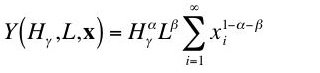
But he is mistaken. He gives the production function for final output as follows:
(1)
The first argument of the production function is the amount of human capital, strangely enough measured on a cardinal scale, employed in the manufacturing sector (as opposed to the research sector). The second argument is the amount of physical labor hired in the manufacturing sector. The remaining arguments are the quantities of the capital goods, each measured in numeraire units. That is, capital is measured in units of "foregone consumption". Apparently, Romer recognizes issues exist here:
"It is possible to exchange a constant number of consumption goods for each unit of capital goods if the production function used to manufacture capital goods has exactly the same functional form as the production function used to manufacture consumption goods." -- Romer (1990): S81
I saw that Romer (1990) was sensitive to a Cambridge capital critique, despite his erroneous claim to be representing capital as composed of diverse commodities, when I first read his paper several years ago. Kurz (2006) recently makes the same point, and apparently I want to see if Park (2006) has come out yet. Steedman (2003) criticizes the lackadaisical approach to measurement scale issues in new growth theory. So one's work can be lauded in mainstream economics, yet still contain technical flaws that were exposed long before and that invalidate one's results.
  • Kurz, Heinz D. (2006). "Whither History of Economic Thought? Going Nowhere Rather Slowly?
  • Park, M. (2006). "Homogenity Masquerading As Variety: The Case of Horizontal Innovation Models", Cambridge Journal of Economics (forthcoming)
  • Romer, Paul M. (1990). "Endogenous Technological Change", The Journal of Political Economy, V. 98, N. 5 (Oct.): S71-S102.
  • Steedman, Ian (2003). "On 'Measuring' Knowledge in New (Endogenous) Growth Theory", in Old and New Growth Theories: An Assessment (ed. by Neri Salvadori), Edward Elgar

Tuesday, October 10, 2006

On the Preface to Adam's Fallacy

I have just began reading Duncan K. Foley's Adam's Fallacy. I have long been taken by the contrast between popular views on Adam Smith, including those put forth by some economists, and what is said in the bits of Smith and historians of economic thought that I have read. Apparently Duncan Foley is modest about his knowledge of the literature of the history of economic thought, while aware of the popular impression:
"This is not, however, a book on the history of of economic thought proper. It uses a historical perspective as a happy way to organize a complex set of ideas into a coherent and understandable story. It reflects much reading and teaching of particular texts in the history of economic thought, but I am far from an expert or a deep scholar of this extensive and demanding subject. In places I have ventured beyond the texts of the authors in question and pursued my own imaginative reconstructions of debates behind the debates, and the sometimes unconscious ground from which political economic knowledge arose. This is my own take on economics, and exploits the great figures in the history of political economy shamelessly for my own ends. Be warned.

...what do I mean by 'Adam's Fallacy'? Adam Smith says many things in The Wealth of Nations that are not fallacious. For example, it is undoubtedly true that self-interest is a powerful motivating force for human beings (though far from being the only one). It is also true that harnessing the pursuit of self-interest through competitive capitalist markets can be (though it is not invariably) a powerful mechanism for fostering progressive technical change and producing material wealth. It would be far from correct to claim that all pursuit of self-interest through competitive markets is morally bad. By 'Adam's Fallacy' I mean something a little more subtle than those much-debated claims. For me the fallacy lies in the idea that it is possible to separate an economic sphere of life, in which the pursuit of self-interest is guided by objective lawas to a socially beneficent outcome, from the rest of social life, in which the pursuit of self-interest is morally problematic and has to be weighed against other ends. This separation of an economic sphere, with its presumed specific principles of organization, from the much messier, less determinate, and morally more problematic issues of politics, social conflict, and values, is the foundation of political economy and economics as an intellectual discipline. Thus to my mind Adam's Fallacy is the kernel of political economy and economics. A full understanding of the arguments of the great economists requires seeing them in the context of this dubious division. In fact, as I hope this book will demonstrate, political economy and economics is at its heart an attempt to come to terms with this dualistic view of social life.

...is it true that Adam Smith committed this fallacy? A better qualified scholar of Adam Smith could make this case textually on the basis of The Wealth of Nations more persuasively than I can, starting from Smith's discussion of self-love as a powerful motivator of human action (Book I, chapter 2), continuing with his characterization of frugal wealth-owners as public benefactors (Book II, chapter 3), and culminating in his famous invocation of the 'invisible hand' (Book IV, chapter 2). But I would argue that it is more to the point that everyone who reads The Wealth of Nations comes away believing that Smith presents the world through the lens of what I have called his fallacy. Smith is too clever and too wily to present the fallacy in its barest form; his political economic world of self-regulating competitive self-interest actually depends crucially on innumerable value-laden political contingencies and institutions. Smith's qualifications of the principle of laissez-faire, for example, wind up presenting a reasonably balanced view of the interaction of politics and the economy. But the premise of Smith's book is that it makes sense to start with the examination of purely economic principles that arise from the interaction of self-interested individuals in the context of competitive markets for privately owned commodities. As I try to show in this book, his successors' investigations and discoveries are already inherent in Smith's conception of the political economic problem." -- Foley (2006: xii-xiv)
By the way, I read Albert Hirschman's The Passion and the Interests (Princton University Press, 1977) as arguing that Adam Smith brought about a simplification in how humans in society were viewed. I think Hirschman's argument is complementary to Foley's, but I need to read more of Foley's book to be convincing.

One can only be disappointed in Brad DeLong's misrepresentation of Foley's thesis. (See also.)

Monday, October 09, 2006

Edmund Phelps Wins "Nobel" Prize

Edmund Phelps wins the 2006 "Nobel" prize in economics.

A Philips curve augmented with inflation expectations is a theory of stagflation. I don't claim any prescience in having blogged on this topic just the other day.

Milton Friedman's theory of the natural rate of employment is closely related to Phelp's theory. Friedman's theory has never made much sense to me. I don't know what it means to talk about the rate of employment ground out by the Walrasian model of general equilibrium, when theory provides no reason to think such a rate will be unique. Furthermore, economists have found the Walrasian model to be logically inconsistent, while the very short run Arrow-Debreu model does not grind out rates of unemployment. Instead, it grinds out time paths of employment rates. I think the theory indicates such paths will not be empirically observed, anyways. Finally, due to hysteresis, the natural rate has turned out to be an empirical failure in giving policy guidance. (See Galbraith 1998 for more on at least some of these points.)

I'm getting used to the "Nobel" being awarded to authors who have at least some works I have read long ago. In this case, I can mention Phelps (1961), for example, which is closely related to Robinson (1962).

I sometimes run into some mainstream economists who whine about my attitude. Given this, I don't know what they are talking about.
  • Galbraith, James K. (1998). Created Unequal: The Crisis in American Pay, Free Press
  • Phelps, Edmund (1961). "The Golden Rule of Accumulation: A Fable for Growthmen", American Economic Review, V. 51, N. 4 (Sep): 638-643
  • Robinson, Joan (1962). "A Neo-Neoclassical Theorem" (in Essays in the Theory of Economic Growth), Macmillan

I'd Like To Hear Second Thoughts On The CCC From Joseph Stiglitz

Stiglitz's first thoughts can be seen in his 1974 review of Harcourt's 1972 survey book. About that time, Stiglitz also reviewed Pasinetti's presentation of the Kahn-Kaldor-Pasinetti-Robinson theory of growth and distribution. Neither Harcourt nor Pasinetti were happy with Stiglitz's respective review. Morishima (1977) is an outgrowth the JEP's editor becoming aware of Pasinetti's unhappiness.

I don't want to hear second thoughts from Stiglitz so much on the technical content below. I rather hear second thoughts on a point from the sociology of "knowledge". What determines how some views become worth considering in mainstream economics, while others are written out? I think Stiglitz might have something interesting to say on that based on his recent experiences, and I wonder if that could inform how he might look back at the Cambridge Capital Controversy.

Stiglitz writes:
"It is also true that with profit-maximizing competitive firms, in long-run equilibrium where all relative prices are constant, the rate of interest is equal to the own rate of return of every capital good (the marginal productivity of every capital good in terms of itself..." -- J. E. Stiglitz (1974)
I find Stiglitz less than forthright in failing to address the conception of capital as finance. Is Stiglitz clear that, in neoclassical theory, no theorem asserts the equality in equilibrium of the interest rate and the marginal product of (finance) capital? I think Stiglitz's formulation about own rates, as if that was a point in dispute, is likely to mislead readers.
"...At any moment, there is a given vector of capital goods and of labor. Under the extremely simplified models conventionally used, these endowments determine the marginal productivity of the different capital goods and the rate of interest. Given the savings behavior, this determines the change in the stocks of capital goods; eventually the economy converges to a state where the rate of interest is equal to the rate of growth divided by the savings propensity; still, at each moment, it is the 'capital goods-labor ratios' which determine the rates of return on the different capital goods." -- J. E. Stiglitz (1974)
(Notice Stiglitz does not say marginal productivities determine factor prices.) I think this emphasis on very short run equilibrium paths has not held up well; I see no reason to think a capitalist economy will follow such a path. Anyways, a consensus still does not exist on whether this approach is resistant to Cambridge capital critiques.

Consider:
"All that [reswitching] implies is that the weak qualitative assumptions we conventionally make in economics - that is, convexity of the technology, with its implications of diminishing returns - do not have any strong implications for comparisons of economies in steady state: that is, reswitching establishes that the derivation of simple comparative dynamics propositions requires stronger assumptions than those required for the existence of competitive equilibrium and the derivation of qualitative properties concerning economies with given initial endowments...

...Moreover, it is easy to develop, using steady-state analysis, all manner of paradoxes. For instance, the opening of free trade may actually lower steady-state consumption (this does not contradict the classical propositions concerning gains to trade). One can show that of all the feasible steady states in a life-cycle model, the one which maximizes steady-state utility is not sustainable by a competitive equilibrium (without appropriate lump-sum transfers), and conversely. (This does not contradict classical welfare propositions.)" -- J. E. Stiglitz (1974)
(I think the classical theory of free trade is more about the comparison of steady states than very short run paths with given initial endowments of capital goods.) I don't think this comment has aged well, either. Economists have not been able to state general assumptions that rule out capital-reversing - which is not the same as reswitching. Furthermore, if reswitching is so non-threatening, why hasn't it entered the mainstream introductory textbooks? Why are economics students at all levels not taught to be clear on the structures of their models and their implications? Surely, one should not still be able to surprise economists with paradoxes whose possibility was established decades ago?

References
  • Harcourt, G. C. (1972). Some Cambridge Controversies in the Theory of Capital, Cambridge University Press
  • Pasinetti, Luigi L. (1974). Growth and Income Distribution: Essays in Economic Theory, Cambridge University Press
  • Stiglitz, Joseph E. (1974). "The Cambridge-Cambridge Controversy in the Theory of Capital: A View from New Haven: A Review Article", Journal of Political Economy, (Cowles Foundation Paper 410), V. 4
  • Stiglitz, Joseph E. (1975). "Growth and Income Distribution: Essays in Economic Theory", Journal of Economic Perspectives, V. 13, N. 4 (Dec.): 1327-1328
  • Morishima, Michio (1977). "Pasinetti's Growth and Income Distribution Revisited", Journal of Economic Perspectives, V. 15, N 1 (Mar.): 56-61

Friday, October 06, 2006

An Explanation Of Stagflation

"A Bastard Golden Age
We must now consider another type of limit upon the rate of accumulation. Inflationary pressure, bringing financial checks into operation, may arise when there is no scarcity of labour - indeed a great mass of non-employment - if the real-wage rate refuses to be depressed below a particular level. A higher rate of accumulation means a lower real-wage rate. When the desired rate of accumulation is greater than the rate which is associated with the minimum acceptable real wage, the desire must be checked. A situation in which the rate of accumulation is being held in check by the threat of rising money wages due to a rise in prices (as opposed to rising money wages due to a scarcity of labour) may be described as a bastard golden age.

The rate of accumulation may be less or greater than the rate of growth of population, so that non-employment is increasing or diminishing. (In the latter case the system is heading towards a legitimate golden age.)

A bastard golden age sets in at a fairly high level of real wages when organized labour has the power to oppose any fall in the real-wage rate. Any attempt to increase the rate of accumulation, unless it is accompanied by a sufficient reduction in consumption out of profits, is then frustrated by an inflationary rise in money-wage rates. In such a situation, the rate of accumulation is limited by the 'inlation barrier'.

A low-level bastard golden age is seen when the real-wage rate is at the minimum level tolerable. (A low-level bastard golden age might have the same standard of life as obtains in a leaden age, but the mechanism of the system is different. In a leaden age the slow rate of accumulation keeps the standard of life to a minimum; in the bastard golden age the minimum standard of life sets a limit to the rate of accumulation.)" -- Joan Robinson (1962). "A Model of Accumulation" (In Essays in The Theory of Economic Growth, Macmillan)
I did not reproduce a footnote in which Robinson references Richard Kahn's "Exercises in the Analysis of Growth" (Oxford Economic Papers, June 1959). Kahn puts forth a similar theory.

I might have read somewhere that if somebody offers a theory that explains a phenomenon before it is observed, scientists will tend to take that theory up for closer examination. But that would have not been written about economics.

Wednesday, October 04, 2006

Interest Rate Unequal To Marginal Product Of Capital (Part 4 Of 4)

4.0 Conclusions
This series of posts has presented a simple explanation of the nonequality of the interest rate and the marginal product of capital, as that equality is understood in macroeconomic models. Thus, neoclassical microeconomics does not imply that equality. Various attempts to defend the macroeconomic models considered here have been examined and have been found wanting. An interesting aspect of this criticism is that it does not seem to be about index number problems. Nor has this argument depended on the phenomena of reswitching at all, and it depended on capital reversing only in criticizing Champernowne's chain index [15]. If the demonstration of the theoretical possibility of these phenomena are taken as central to the Cambridge Capital Controversy, then the implications of that controversy should extend beyond aggregate neoclassical theory [16]. As far as I can see, this argument is fairly well understood on the Cambridge, England side.

It is curious that economists continue to use aggregate production functions despite the clear warnings of this traditional argument. Many of those economists who follow Solow or Lucas do not seem concerned about their inadequate concept of capital. Although these researchers may be interested in technical improvements in their models, capital-theoretic problems do not seem high on their agenda. Furthermore, much of graduate education in economics seems to leave newly emerging economists unaware of capital-theoretic problems with their models. These young economists do not seem to possess the analytical tools that were forged in the CCC, such as the correct analysis of the choice of technique, a correct analysis of the relationship between the theory of rent and income distribution, or even how to analyze depreciation and the economic life of machines in a framework of joint production.

What explains this apparent continuation of the miseducation of economists that Joan Robinson decried over fifty years ago [17]? My hypothesis is partly ideological. Any advanced treatment of capital theory and the appropriate analytical tools [18] would expose the student to the Cambridge Capital Controversy. The student would then learn about some serious questioning of the internal consistency of many claims of neoclassical economists. There are obviously normative overtones to this controversy, for example, over the exploitative nature of profits and the capitalist system as a whole. Neoclassical economics might be claimed to currently fill the social role of "hired prize fighters" for capital, what Marx characterized as "vulgar economics" [19]. This social role is threatened by the CCC.

Footnotes
[15]
"The construction of the production function does not even require this refutation via the phenonomenon of returning techniques ('reswitching'), because a production function for which the marginal product equals the factor price already becomes impossible if the wage curves of single techniques are not straight lines (except for a few unimportant cases; see Garegnani, 1970, Hunt and Schwartz, 1972). Contrary to the usual interpretations today, the debate about the possibility of returning techniques is important not only because it proves that the production function with its marginal products is nonsensical, but because, on a more general level, it can be shown that a demand function for capital...cannot be defined." -- Bertram Schefold (1989). Mr. Sraffa on Joint Production and Other Essays, Unwin Hyman: 292.
[16]
[O]ne should emphasize the distinction between two types of measurement. First, there was the one in which the statisticians were mainly interested. Second, there was measurement in theory. The statisticians' measures were only approximate and provided a suitable field for work in solving index number problems. The theoretical measures required absolute precision. Any imperfections in these theoretical measures were not merely upsetting, but knocked down the whole theoretical basis. One could measure capital in pounds or dollars and introduce this into a production function. The definition in this case must be absolutely water-tight, for with a given quantity of capital one had a certain rate of interest so that the quantity of capital was an essential part of the mechanism. One therefore had to keep the definition of capital separate from the needs of statistical measurement, which were quite diffent. The work of J. B. Clark, Bohm-Bawerk and others was intended to produce pure definitions of capital, as required by their theories, not as a guide to actual measurement. If we found contradictions, then these pointed to defects in the theory, and an inability to define measures of capital accurately. It was on this - the chief failing of capital theory - that we should concentrate rather than on problems of measurement." -- Piero Sraffa, Interventions in the debate at the Corfu Conference on the "Theory of Capital", 4-11 September 1958.

[17] This miseducation is asserted on slightly different grounds in the following quote:
"Observe that even in neoclassical theory full employment alone is not enough to transform marginal-productivity relationships into a long-run theory of distribution. In long-run neoclassical theory, the capital:labor ratio is endogeneously determined, so that the wage rate cannot be determined solely by marginal productivity of labor at full employment - not even in Chicago. Instead, distribution must reflect household preferences with respect to present and future consumption.

Thus, it is fair to conclude that there are two marginal-productivity theories. The first is a relatively innocuous, general theory that involves nothing more controversial than competitive profit maximization - and provides correspondingly little contribution to the theory of growth and distribution under capitalism. The second is more powerful, and very special, providing by itself a theory of distribution, for the short run at least, whose 'only' defects are (1) that it assumes full employment and (2) that it begs the question of accumulation. The wonder is that it is precisely this theory that so many students come away with from their study of economics. Only slightly more wondrous is that by and large they believe it!" -- Stephen A. Marglin (1984). Growth, Distribution, and Prices, Harvard University Press: 330-331.
Neither version of marginal productivity theory need include the equality of the marginal product of capital and the interest rate in an aggregate production function framework.

[18] Syed Ahmad (1991). Capital in Economic Theory: Neo-classical, Cambridge, and Chaos, Edward-Elgar.

[19]
"In summary I believe that Marx's sociology of economic knowledge was quite an impressive achievement, in spite of being flawed by its reliance on functional explanations and the labor theory of value... The recent 'capital controversy' shows that these are not dead issues. Surely some cognitive confusion lay at the origin of the idea that 'capital' can be treated as a homogeneous 'factor of production,' for instance an inference from the fact that capitalists form a fairly homogeneous class. And conceivably the tenacity with which the neoclassical economists stuck to the notion of aggregate capital has something to do with non-cognitive interests. This, admittedly, is sheer speculation, and I may be quite wrong. Vested intellectual interests may suffice to explain the resistance. Be this as it may, the sociology of economic conceptions and economic theory is a field worth cultivating, if proper attention is paid to the many methodological pitfalls in this domain." -- Jon Elster (1985). Making Sense of Marx, Cambridge University Press: 504.